Why Your Handstand Holds Better at the End of Class
Quick Answer: Late-class handstands feel better because shoulder and wrist mobility peak after 40+ minutes of work, your nervous system has calibrated to inverted positions, and fatigue removes the over-gripping and over-correcting that wreck early attempts. It is genuine, not imagination. But it is a poor argument for only practicing tired - the honest approach is a longer, more specific warm-up at the start, and skill work before conditioning, not after.
Most adult gymnasts notice this within a few months and draw exactly the wrong conclusion from it.
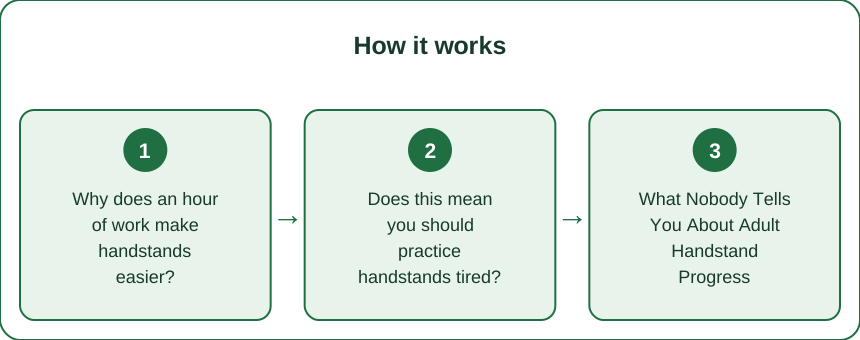
Why does an hour of work make handstands easier?
Three systems arrive late, and the handstand depends on all three.
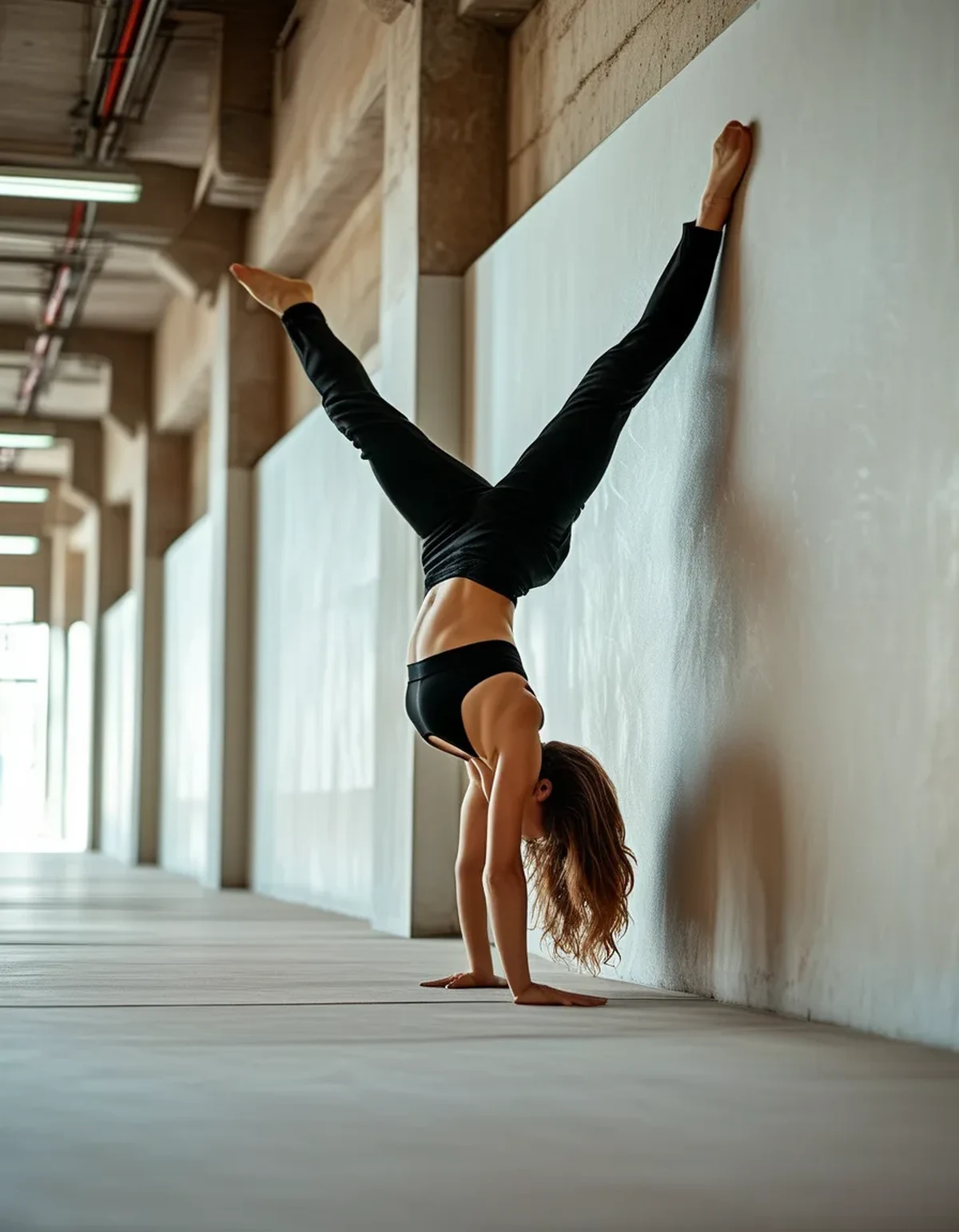
Shoulder flexion opens slowly. A handstand needs close to 180 degrees of overhead shoulder range, and that range improves substantially with warmth and repeated movement. Most adults are 10 to 20 degrees short cold and reach their usable range only after sustained work - which is precisely the range that decides whether you stack over your hands or arch to compensate.
Wrists need more preparation than anything else. Wrist extension under load is the limiting factor for most adult beginners, and wrists respond to warm-up more slowly than large joints. An hour in and out of the floor gives them the loaded exposure they need.
Your nervous system recalibrates for inversion. Balance in a handstand relies on the vestibular system and proprioception, and both improve with recent, repeated exposure. Being upside down several times in a session updates the internal model, and the tenth attempt benefits from the first nine.
Mild fatigue reduces over-correction. Early attempts are full of frantic micro-adjustments - fingers clawing, hips piking, over-gripping the floor. Tired, you do less of it, and doing less is usually what a handstand needs. The stillness that late attempts have is often just the absence of panic.
And you have stopped thinking. By the end of class you are not running through a checklist of cues, which frees up attention for actual balance.
Does this mean you should practice handstands tired?
No, and this is where people go wrong.
Skill learning happens best when fresh. Motor learning research is consistent: new patterns are acquired more effectively in a non-fatigued state. Practicing a skill tired reinforces the compensations fatigue produces, and those compensations are what you will default to under pressure.
Fatigue increases injury risk in an inverted position. Wrists, shoulders, and the neck are all loaded, and reduced control at the end of a hard session is exactly when falls go badly. This is the main practical objection, and it is enough on its own.
What the late-class effect actually proves is a warm-up problem. If your handstand needs 40 minutes of general work to show up, the fix is 12 minutes of specific work at the start, not moving all skill practice to the end.
The right structure for most adult classes: thorough specific warm-up, then skill work while fresh, then conditioning, then optional easy skill play at the end if you want it.
One legitimate exception: deliberately practicing a skill under mild fatigue, once you already own it, builds robustness. That is a late-stage tool for a skill you can do reliably fresh - not a way to learn one.
What Nobody Tells You About Adult Handstand Progress
Wrists are the bottleneck far more often than shoulders or core. Adults arrive with decades of wrist disuse in extension. A proper wrist prep sequence - kneeling rocks forward and back, fingertip pushes, palm rotations, all progressive - changes handstands faster than any amount of core work.
Hollow body strength is not the same as handstand strength. You can hold an excellent hollow on the floor and still arch inverted, because the shoulder position is what sets the spine, not the abs. If your handstand banana persists, look at overhead shoulder range before you add more hollow holds.
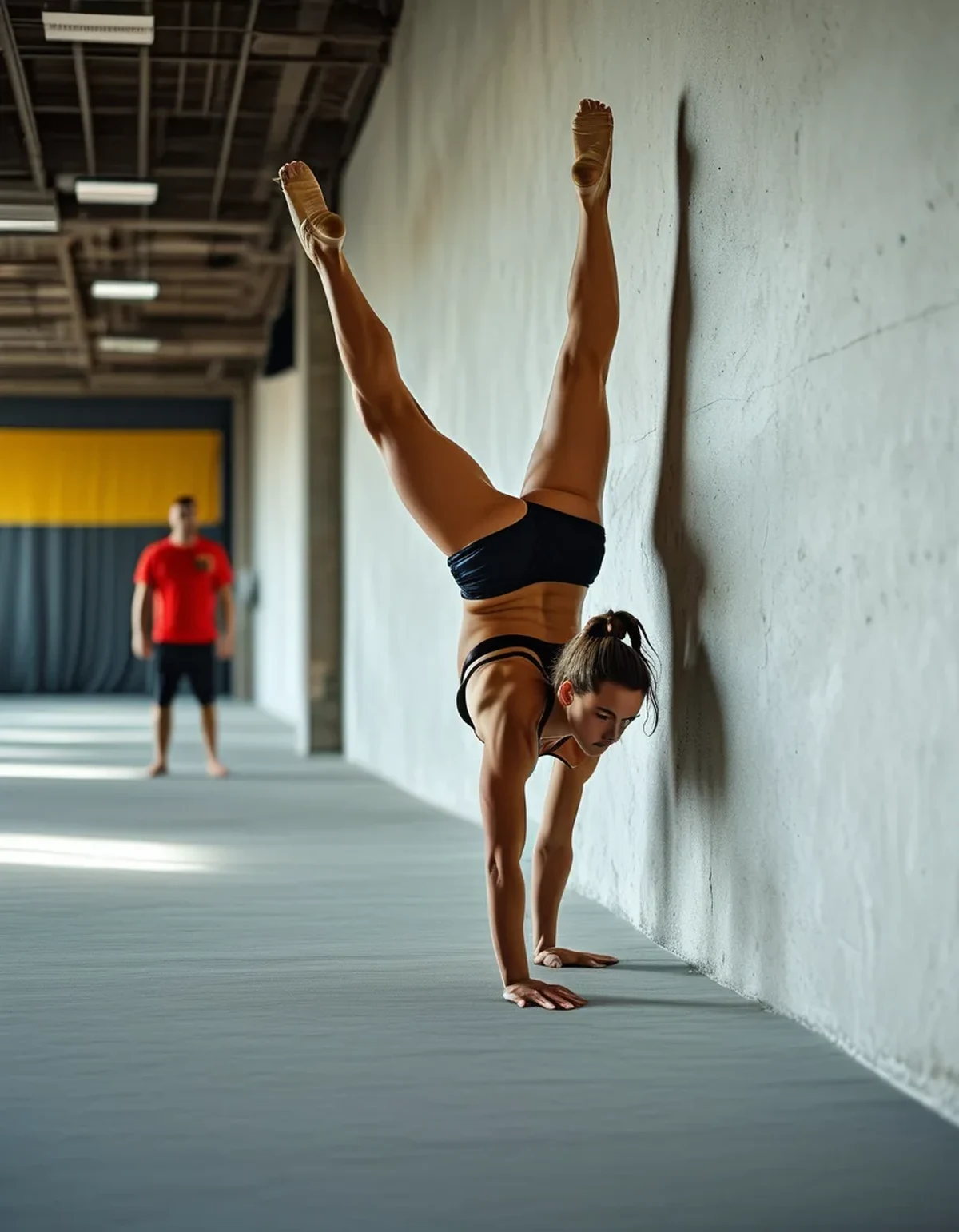
Wall work has a ceiling and most people live under it. Chest-to-wall builds the correct line, back-to-wall builds confidence, and neither builds balance, because the wall is doing the balancing. At some point you have to spend time away from it, falling and bailing, and that transition is where most adults stall for a year.
Learning to bail is the actual prerequisite. A confident cartwheel exit removes the fear that produces the tension that prevents balance. Practice the exit before you need it, deliberately, until it is boring.
Progress is measured in seconds and it is slow. Going from 2 seconds to 10 seconds of free balance commonly takes an adult 6 to 12 months of consistent practice. That is normal, not a sign you are doing it wrong.
Daily short practice beats long weekly sessions. Five to ten minutes most days produces faster balance gains than one 45-minute session per week, because balance is a nervous system skill and the nervous system likes frequency.
And your best handstand of the week probably will not happen in class. It happens on the third rep of a home practice on a good day, which is worth knowing so you stop judging your progress on class performance alone.
What does a good warm-up for handstands actually look like?
Twelve minutes, and specific throughout.
Two minutes of general work. Easy movement to raise temperature - skipping, jogging, arm swings. Enough to break a light sweat, not enough to tire you.
Three minutes of wrist preparation. Kneeling wrist rocks with fingers forward, then fingers back, then palms up. Fingertip pushes into the floor. Build load gradually rather than dropping straight into full bodyweight - the goal is prepared wrists, not fatigued ones.
Three minutes of shoulder opening. Overhead reaches against a wall, band dislocates or passthroughs, thoracic extension over a roller or bench. Thoracic spine mobility is the hidden half of overhead range, and it is where autumn stiffness shows up first.
Two minutes of core activation in the shape you want. Hollow holds, a few tuck-ups, dead bugs. Short and crisp, not to failure.
Two minutes of inversion exposure. Downward dog, wall walks, a few short chest-to-wall holds. This is the calibration step that late-class practice was doing for you accidentally.
Then practice while fresh. If your first free attempt after this warm-up still feels dramatically worse than your last attempt of last class, extend the wrist and thoracic sections - those two are almost always where the missing range lives, especially once the weather cools and everyone arrives stiffer than they did in July.
FAQ: Adult Handstand Questions, Answered
How long should I hold a handstand before progressing?
A controlled 10 to 15 seconds of free balance with a reliable bail is a reasonable point to start adding variations. Chasing longer holds before you can bail confidently tends to build tension rather than skill.
Why is my handstand better against the wall than free?
Because the wall removes the balance component entirely. Wall holds build shape and endurance; free attempts build balance. They are different skills and both need practice time.
Should I practice every day?
Short daily practice - 5 to 10 minutes - works better than long infrequent sessions for balance skills, as long as your wrists tolerate it. Back off if wrist soreness lasts into the next day.
Is it too late to learn as an adult?
No. Adults learn handstands routinely; the timeline is longer than it is for children, mostly because of wrist and shoulder range rather than any age limit on the skill itself.
This is general information, not medical advice. Persistent wrist, shoulder, or neck pain is worth reviewing with a professional before continuing.
TL;DR:
- Late-class handstands feel better because shoulder and wrist range peak late, inversion calibrates the nervous system, and fatigue removes over-correction.
- That is a warm-up signal, not a training plan - learn skills fresh, and do conditioning afterward.
- Build a 12-minute specific warm-up: wrists, thoracic spine, core shape, then inversion exposure.
- Wrists are the usual bottleneck, and learning to bail confidently is what unlocks free balance.
If the best handstand of your class arrives in the last five minutes, the honest read is that you spent an hour warming up for it. Move that preparation to the front and you get the same handstand with an hour of practice still ahead of you - which is the difference between noticing progress and making it.
Keep Reading
This article is for general informational and styling purposes only. Fit, sizing, and product availability may vary.