Why Adults Are So Much More Scared of Falling Than Kids in Gymnastics
Quick Answer: Adults fear falling more than kids mainly because they’ve accumulated real injury experience and a stronger sense of consequence, not because their bodies are inherently less capable — the fear is learned, not physical.
A seven-year-old in the next lane just threw a skill you’ve been circling for three weeks. It’s not that their body works better. It’s that they haven’t learned to be afraid yet.
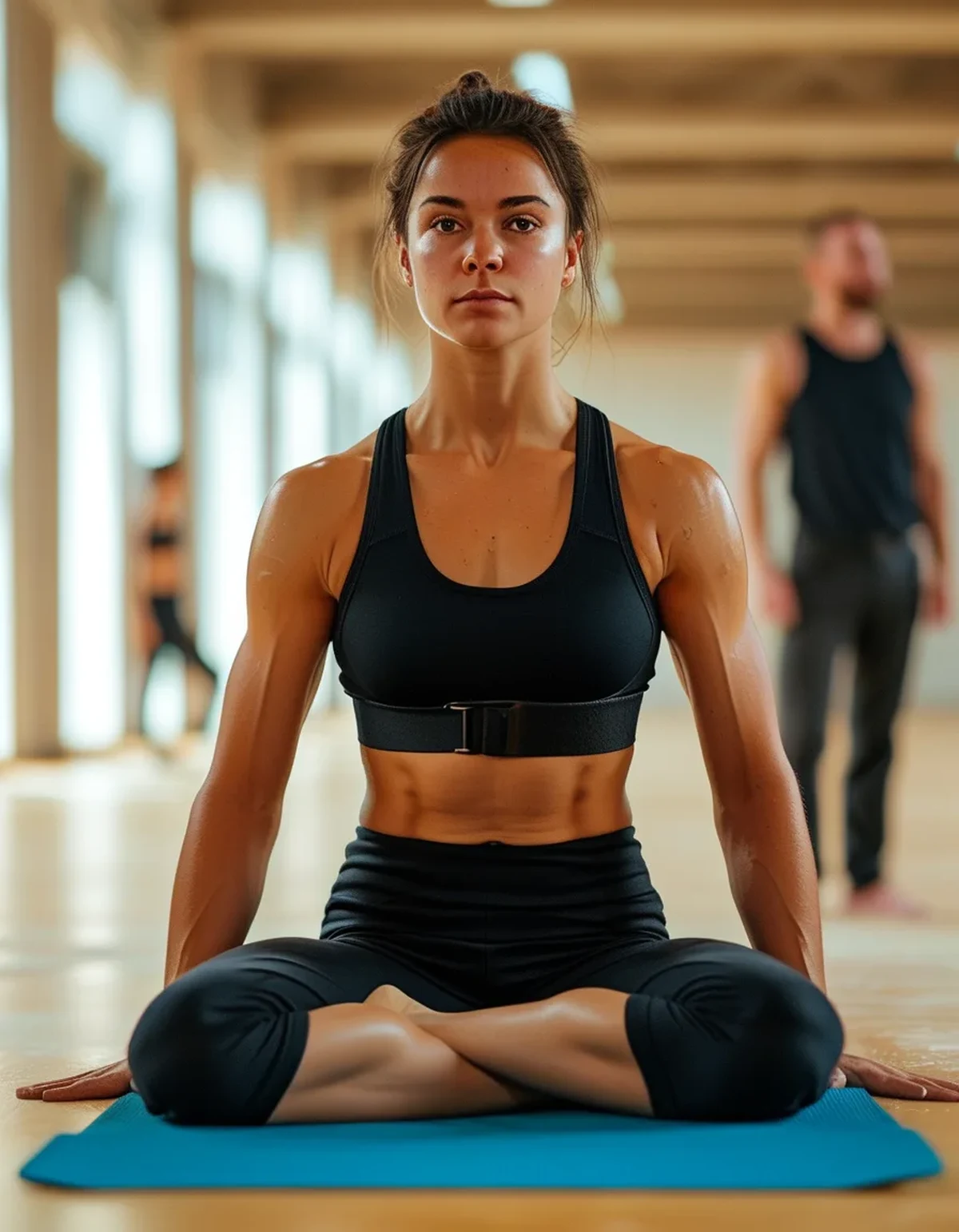
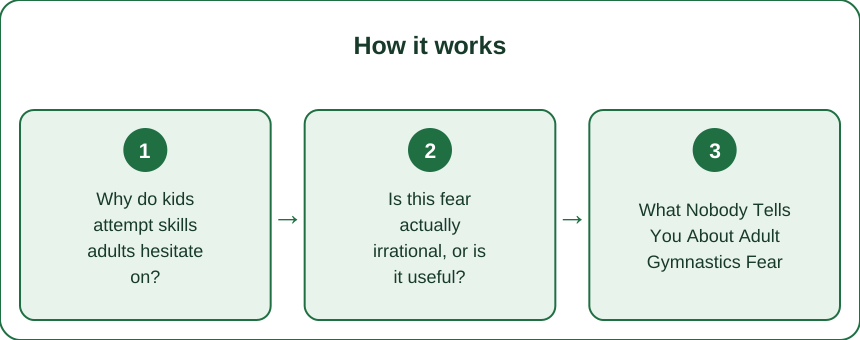
Why do kids attempt skills adults hesitate on?
Because children generally haven’t built up a strong mental model of consequences — they haven’t broken a bone, missed work from an injury, or watched a video of a fall gone wrong, so the fear response that stops adults simply hasn’t formed yet.
Kids also tend to have less body awareness of risk in the moment, which sounds like a disadvantage but functionally removes the hesitation that slows adults down mid-skill.
Is this fear actually irrational, or is it useful?
It’s partly useful and partly overactive — adults genuinely do have more to lose (job responsibilities, longer recovery times, family obligations), so some caution is rational.
But the fear response often overshoots the actual risk of a spotted, mat-cushioned skill in a controlled class setting, treating a supervised drill the same way it would treat an unsupervised risk.
What Nobody Tells You About Adult Gymnastics Fear
Hesitating mid-skill is often more dangerous than committing to it — pulling back halfway through a rotation or vault is a common source of awkward landings and injuries, more so than a fully committed attempt.
Also rarely said out loud: coaches expect adult hesitation and build progressions specifically around it — the drills that feel slow are designed to rebuild trust in your own body, not to stall you.
How do you actually work through this fear?
Break the skill into smaller progressions with a spotter at each stage, rather than attempting the full skill and hoping fear doesn’t interfere — confidence builds through repeated small wins, not one big leap.
Visualization also helps measurably: mentally rehearsing the skill successfully before attempting it has been shown in sports psychology research to reduce hesitation during the actual attempt.
FAQ: Adult Gymnastics Fear Questions, Answered
Will this fear ever fully go away?
For most adults it significantly reduces with consistent practice and small successful attempts, though some heightened caution compared to childhood is normal and not something to eliminate entirely.
Should I push through fear or wait until it feels comfortable?
A measured approach works best — using spotters and progressions to push slightly past comfort, rather than either forcing the full skill or waiting indefinitely for fear to disappear on its own.
Is it normal to regress after an injury or bad fall?
Yes, very common — a fall or injury often resets confidence significantly, and rebuilding through progressions again (rather than jumping back to pre-injury skill level) is the expected path.
TL;DR:
- Adult fear of falling is mostly learned from accumulated experience, not a physical limitation
- Hesitating mid-skill is often riskier than committing fully once you’ve started
- Coaches design slow progressions specifically to rebuild trust, not to hold you back
- Visualization and small successful attempts build confidence faster than forcing the full skill
Next class, try committing fully to just one progression step instead of the whole skill — small wins add up faster than you’d expect.
Keep Reading
This article is for general informational and styling purposes only. Fit, sizing, and product availability may vary.