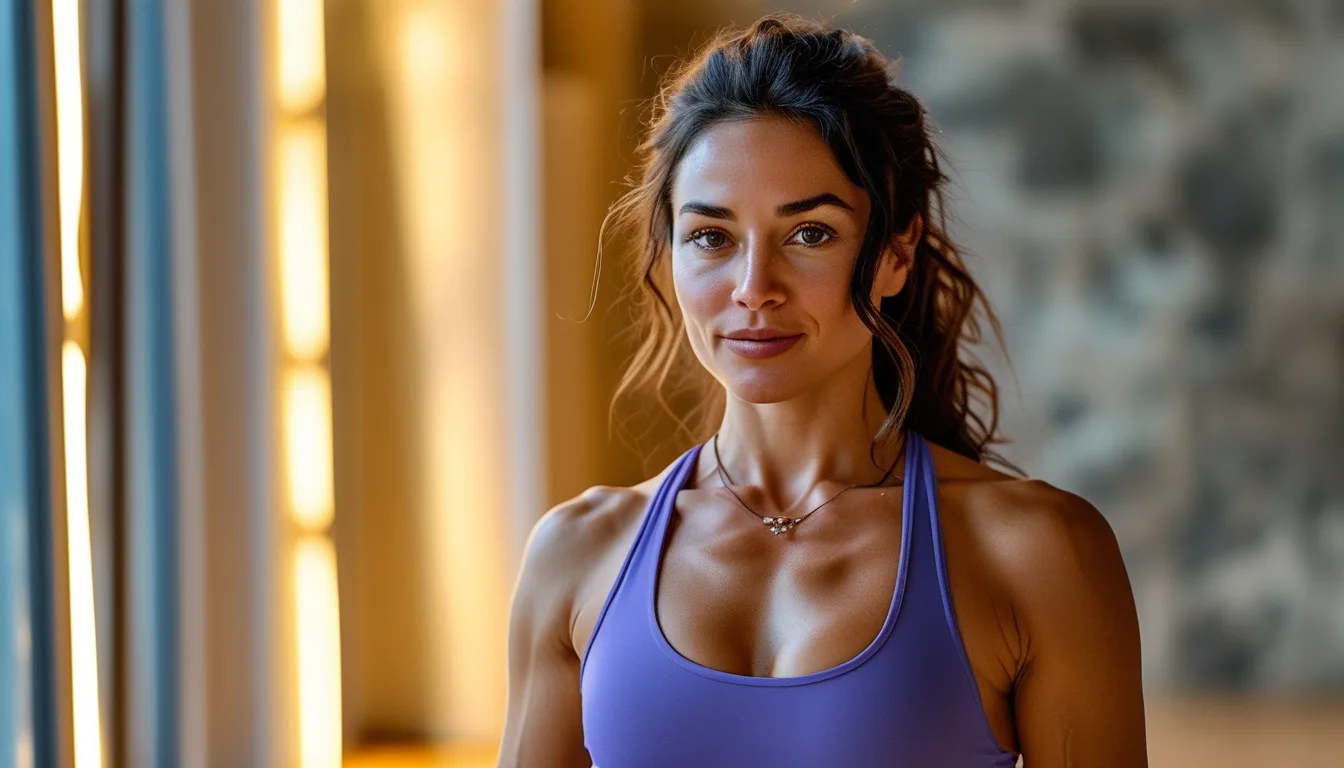
Adult Gymnastics: What to Wear, and Why It Matters More Than You Think
Quick Answer: Fitted, everywhere, without exception. Loose clothing catches on bars, obscures your body position from the coach, and interferes with spotting - three reasons that are all about safety rather than appearance. You do not need a leotard: fitted leggings or shorts with a fitted top tucked in is standard for adult classes. What matters most: nothing baggy, no zips or buttons, no jewellery, hair tied flat and secure, and bare feet or gymnastics slippers. Bring chalk if you have it, and expect the first bar session to be limited by your hands rather than your strength.
Adult gymnastics is one of the few activities where a clothing choice can genuinely end your session early.
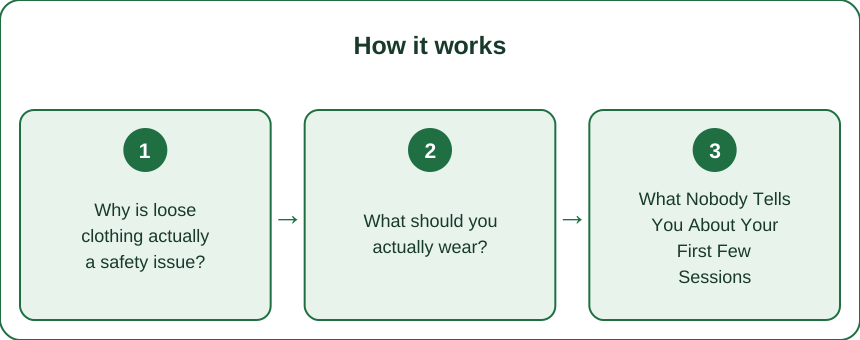
Why is loose clothing actually a safety issue?
Three specific mechanisms, and the first one is not theoretical.
Fabric catches on bars. A loose t-shirt on the uneven or high bar can wrap, snag, or bunch at exactly the moment you are rotating around it. On a bar you are moving fast and you cannot let go to fix anything. Every gymnastics club has the same rule for this reason.
A coach cannot see your body line. Gymnastics is entirely about shape - hollow, arch, straight, tight. A coach who cannot see whether your hips are open or your back is arching cannot correct it. In a baggy t-shirt, a handstand correction becomes a guess.
Spotting requires contact. A coach spotting a skill places hands on your back, hips, or legs, often at speed. Loose fabric slides and gives them nothing to hold - and it can bunch under their hand at the moment they need to support your weight.
A fourth, less serious: fabric rides. A top that flips over your head during an inversion is a distraction at best and a genuine problem at worst.
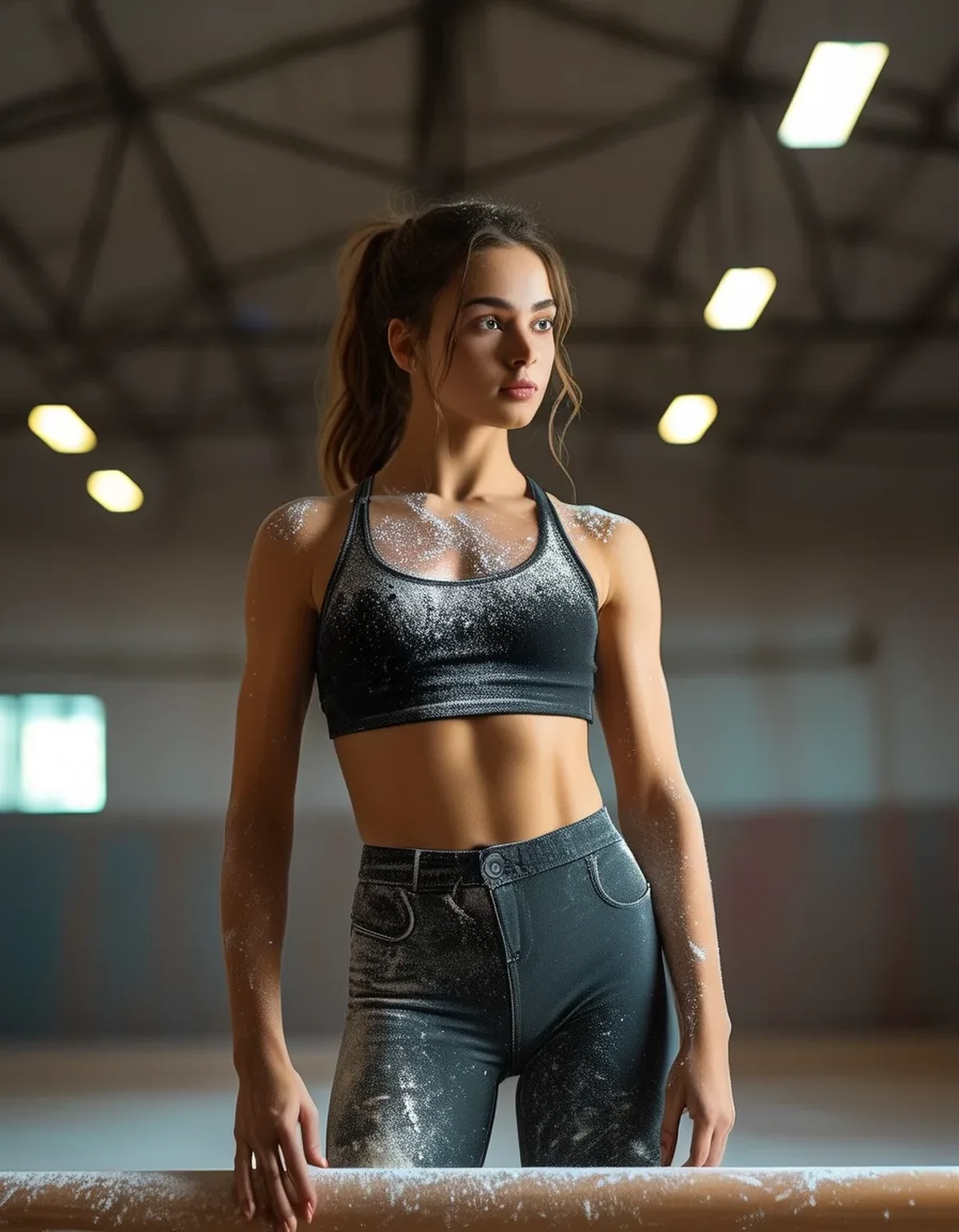
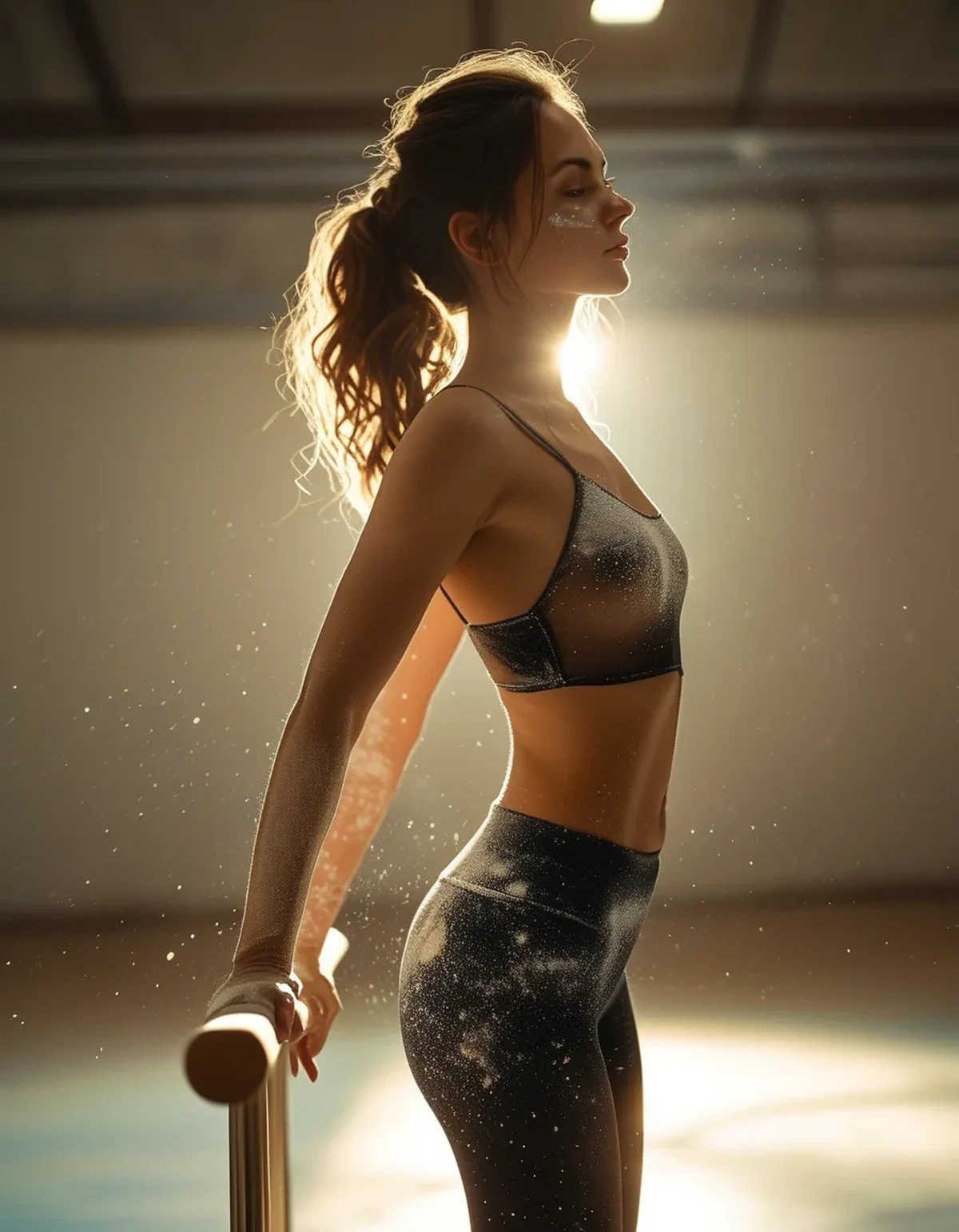
None of this means you have to wear a leotard. Fitted leggings and a fitted long-sleeve top solve every one of these problems and cover far more skin than a leotard does. Fitted is the requirement; revealing is not.
What should you actually wear?
The standard adult class kit, item by item.
Bottoms: fitted leggings, capri leggings, or fitted shorts. Full-length leggings are the practical choice for beam and bars because they reduce skin friction against apparatus. Shorts are cooler and better for floor work but you will feel the beam more.
Top: a fitted t-shirt, vest, or long-sleeve, tucked into your leggings. Tucking is the key detail and it is what stops the ride-up problem. If it will not stay tucked, wear something more fitted.
Sports bra: high support, and secure straps. You will be inverted, and you will be landing. Racerback or crossback stays put better than straight straps during rotation.
Feet: bare, usually. Most gymnastics is done barefoot for grip and for foot articulation. Gymnastics slippers are an option if you dislike bare feet or have sensitive soles, and they help on beam.
Hair: tied back, flat, and secure. No hard clips, no buns that stop you lying flat on your back, and nothing that will come out mid-skill. A low secure ponytail or a braid is the standard.
Absolutely not: zips, buttons, drawstrings, hoods, jewellery, watches, or anything with a rough seam. Zips scratch apparatus and the athlete, and a hood is a snag hazard on bars.
Leotards are optional in adult classes and plenty of people wear them for practical reasons - they cannot ride up, and there is no fabric to catch. Nobody minds either way.
What Nobody Tells You About Your First Few Sessions
Your hands will fail before your strength does. The most universal beginner experience. Bar work is limited by skin, not by arms, for the first few weeks - and hand rips are common and genuinely painful. Start with short bar sessions, and stop before the skin is compromised rather than after.
Chalk matters and clubs vary on whether they provide it. Ask before your first session. A small block of gym chalk is inexpensive and worth owning.
You will get bruises in places you did not expect. Hip bones from bars, forearms from beam, and the tops of your feet. This is normal. Deep, painful, or unexplained bruising is not - that is worth mentioning.
Beam is much colder on skin than you expect and full-length leggings help considerably.
Everything is chalky. Dark clothing shows chalk dramatically, which is entirely cosmetic but worth knowing before you wear your best black leggings.
Adults are more scared of falling than children are, and that is a physical reality rather than a character flaw. Fitted clothing genuinely helps here - knowing that nothing will catch or ride up removes one whole layer of hesitation during an inversion.
And you will be sore in your shoulders and lats, not your abs, which surprises almost everyone.
Does the season change anything?
More than you would think, because gymnastics halls are large and often cold.
Gymnastics gyms are big, high-ceilinged spaces and they get genuinely cold. From about October, you will want a layer for the warm-up and between rotations, even though you will be warm during work.
Bring a layer you can take off quickly. A zip-up hoodie is the obvious choice and it is the one thing not to wear on apparatus - wear it for the warm-up and take it off entirely before bars. A fitted long-sleeve top underneath is the better solution.
Cold hands grip worse and rip more. Warm your hands properly before bar work - cold skin is stiffer and tears more readily at the calluses. This is a real and specific autumn problem.
Flexibility drops in the first cool weeks. Everyone feels it. Longer warm-ups, and do not judge your range against your August self for the first few sessions of the season.
Chalk behaves differently in dry air. As indoor heating starts and humidity drops, chalk gets less effective and hands get drier and crack more. A hand balm at night becomes part of the routine from now until spring.
Full-length leggings become the default rather than shorts, for warmth and for the extra layer between skin and cold apparatus.
How do you look after your hands and skin?
The thing that determines whether you can train consistently.
File your calluses flat, weekly. A raised callus is what tears - it catches on the bar and lifts. Keep the skin thick but level, with a foot file on damp skin.
Moisturise at night, not before training. Any cream on your hands before bar work ruins your grip and increases slipping. At night it keeps skin supple enough not to crack.
Stop bar work before the skin goes shiny and hot. That is the stage immediately before a rip. Finishing one set early costs you nothing; a rip costs you a week.
If you do rip: clean it, trim the loose flap, keep it covered and moist while it heals. Do not pick at it, and give it real time.
Grips are an option once you progress, but most adult beginners do not need them and they change the feel of the bar considerably. Ask your coach when it is worth starting.
Keep nails short. Both for grip and because long nails dig into your own palm under a bar hold.
Cover jewellery you cannot remove. Tape over a ring you cannot get off. Anything metal on a bar or a beam is a hazard to you and to the apparatus.
When to see a professional: wrist pain that persists between sessions, any joint pain that is sharp rather than sore, or a rip that shows signs of infection. This is general information, not medical advice.
FAQ: What to Wear for Adult Gymnastics, Answered
Do I have to wear a leotard?
No. Fitted leggings and a tucked-in fitted top is standard in adult classes and it is what most people wear.
Can I wear socks?
Usually not on floor or beam - grip is essential and socks slide dangerously. Gymnastics slippers are the alternative if you do not want bare feet.
What about a long-sleeve top?
Completely fine and often preferred - it protects forearms on beam and bars and it is warmer in a cold hall. Just make sure it is fitted and tucked.
Do I need my own chalk?
Check with the club. Many provide it; some ask you to bring your own. A block costs very little.
What should I not wear at all?
Zips, buttons, hoods, drawstrings, jewellery, watches, and anything loose. Those are the standard rules at essentially every club.
Will my leggings be see-through in a gymnastics position?
Worth checking. Bridge and straddle positions stretch fabric considerably more than a squat does. Test at home in good light before your first class.
TL;DR:
- Fitted everywhere - loose fabric catches on bars, hides your body line from the coach, and interferes with spotting.
- Fitted leggings plus a tucked-in fitted top is the standard adult kit. A leotard is optional, not required.
- No zips, buttons, hoods, drawstrings, or jewellery. Hair tied flat and secure. Bare feet or gym slippers.
- Your hands will limit you before your strength does. File calluses flat, moisturise at night only, and stop before the skin goes hot.
- Cold halls mean a removable warm-up layer and warm hands before bars - cold skin rips more easily.
- Test leggings in a bridge or straddle, not a squat, before the first class.
It looks like a clothing question and it is really a safety and coaching question. Get it right once and you never think about it again.
See It in Motion
Seen here: Crewneck Short Sleeve Workout T-Shirt — shop it on bubblelime.com
Keep Reading
This article is for general informational and styling purposes only. Fit, sizing, and product availability may vary.