Why Adult Gymnastics Injuries Happen in a Completely Different Pattern Than Kids'
Adult gymnastics students often assume the same injury risks apply as they did for kids in the sport, but adult bodies fail in different ways and at different points. Understanding the pattern is what actually prevents the most common adult injuries.


Why Adult Injury Patterns Differ
The physiological differences: the the-reduced-tissue-elasticity (adult tendons and ligaments having measurably less elasticity than a child’s, making adults more prone to strains at end-range positions that kids tolerate more easily), the the-joint-mobility-baseline-gap (most adults starting gymnastics with significantly less baseline joint mobility than children who grow up in the sport, meaning skills that look basic actually demand mobility work first), the the-bone-density-consideration (adult bones responding to impact differently than a child’s still-developing skeleton, which changes the risk profile for landings and falls specifically).

Where Adults Actually Get Hurt
The common injury sites: the the-wrist-overuse-pattern (wrist strain from weight-bearing skills being disproportionately common in adult beginners, since typical adult daily life provides far less wrist-loading conditioning than a child’s play naturally builds), the the-shoulder-impingement-risk (shoulder impingement showing up more in adults attempting overhead and inverted positions without the gradual mobility base kids develop over years), the the-lower-back-vulnerability (lower back strain from arching positions being a common adult injury point, tied directly to reduced spinal mobility compared to a child’s naturally more flexible spine).
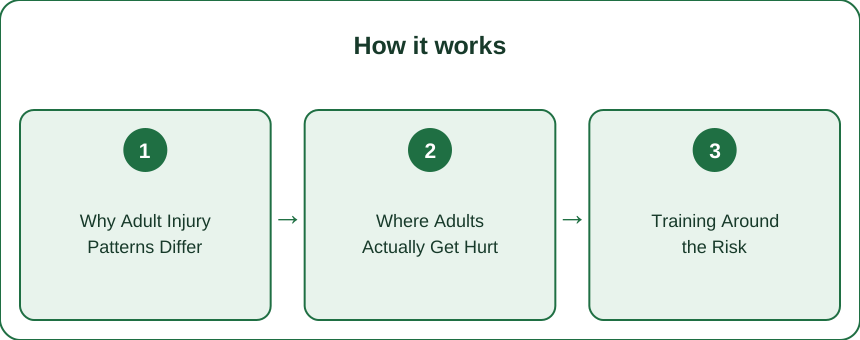
Training Around the Risk
The practical adjustments: the the-mobility-work-comes-first (dedicated wrist, shoulder, and spine mobility work before skill attempts being the single most protective habit for adult gymnastics students), the the-progression-patience-point (adult students benefiting from a slower skill progression than a class pace built around younger, more naturally mobile bodies), and the frame (adult gymnastics injury prevention is about mobility work before skills, not just general conditioning)). This is general information, not medical advice.
Adult gymnastics students often carry over injury assumptions from watching kids in the sport, but adult bodies fail differently — tendons and ligaments have measurably less elasticity, baseline joint mobility is typically far lower than a child growing up in the sport, and bones respond to impact differently. That shows up as a distinct injury pattern: wrist strain from weight-bearing skills, shoulder impingement from overhead and inverted positions attempted without a gradual mobility base, and lower back strain from arching positions that a child’s more flexible spine tolerates easily. The most protective habit is dedicated wrist, shoulder, and spine mobility work before attempting skills, along with accepting a slower progression than a class pace built around younger, more mobile bodies. Why Adult Gymnastics Injuries Happen in a Completely Different Pattern Than Kids’ comes down to training the mobility gap, not just general fitness. This is general information, not medical advice.
Keep Reading
This article is for general informational and styling purposes only. Fit, sizing, and product availability may vary.