Adult Gymnastics Hand Rips: Prevention and Care
Quick Answer: Rips happen when a callus - built-up dead skin - catches on the bar and shears away from the living skin underneath. Adults get them disproportionately because they arrive with soft hands and often do too much bar volume too soon. Prevention is filing calluses flat weekly, using grips once volume rises, and building bar volume gradually. For an existing rip: trim the loose flap, clean it, keep it moisturised, cover it for training, and expect five to seven days.
It was fine on the fourth set. On the fifth it was not.
The callus you were proud of is the reason it happened.
This is general information, not medical advice.

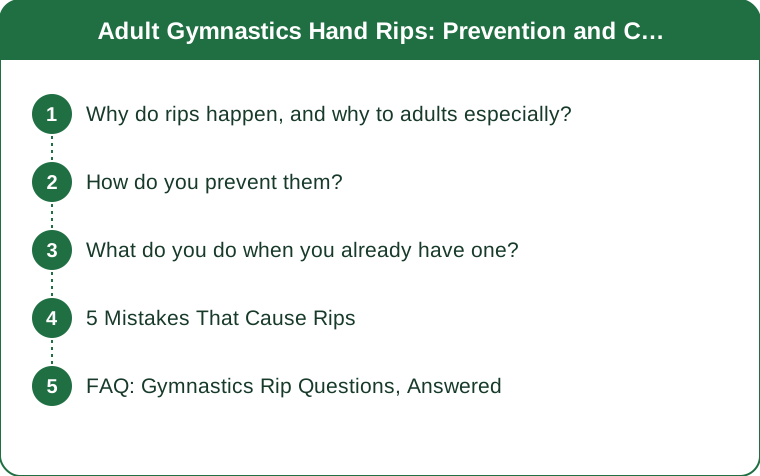
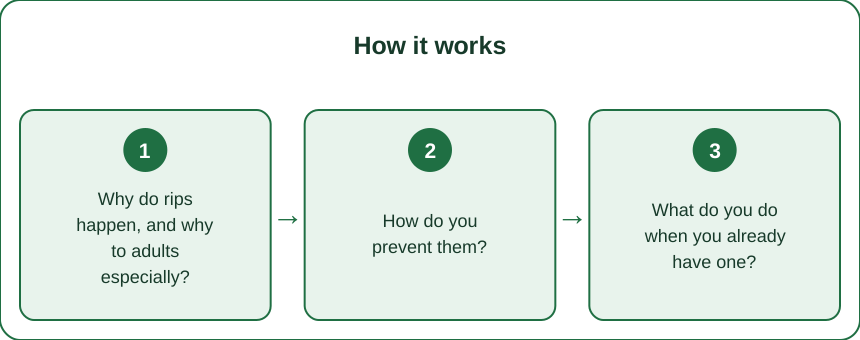
Why do rips happen, and why to adults especially?
Because a raised callus gives the bar something to grab, and adult hands are the wrong texture at the wrong volume.
Calluses form as a protective response to repeated friction - the skin thickens where it is stressed. Up to a point this is exactly what you want. Past that point the callus becomes a raised ridge that sits proud of the surrounding skin.
During a swing or a kip, the hand rotates around the bar while the skin stays gripped. A raised callus catches, the bar keeps turning, and the shear force separates the thickened layer from the living tissue beneath it. That is a rip.
So the callus is not protecting you at that point - it is the failure point. The whole prevention strategy follows from this: you want thickened skin that is flat and smooth, not thickened skin that is raised and ridged.
Why adults are more prone:
- Starting soft. Adults who did not grow up in the sport have hands adapted to keyboards, not bars, and skin takes weeks to adapt
- Volume mismatch. Adult classes often compress a lot of bar work into one or two sessions a week, so the hands get a large stimulus with a long gap and never adapt smoothly
- Enthusiasm. A good session with a new skill leads to more repetitions than the hands are ready for. This is the single most common cause
- Age-related skin changes. Skin becomes somewhat less elastic and slower to repair over time, which extends healing
- Hand care habits. Adults moisturise more, which is generally good and can leave skin softer than the sport wants if applied right before training
Two conditions that reliably produce rips:
- Very dry skin, which is inelastic and tears rather than stretching
- Very moist skin, from sweat or a recent moisturiser, which grips the bar too well and shears
The target is dry-but-supple, which is why chalk plus a nightly moisturiser plus filing is the standard combination. Each addresses a different failure mode.
How do you prevent them?
File the calluses, manage the volume, and use grips once the volume justifies them.
Filing is the highest-return habit and the one most adults skip.
- Once or twice a week, on damp skin after a shower when the callus is soft
- A pumice stone, a foot file or fine sandpaper - all work
- File the raised callus flat with the surrounding skin. Do not remove it entirely - you want thickness without elevation
- Follow with a moisturiser at night, not before training
Volume management is the other half:
- Build bar volume gradually. A jump from 20 to 60 bar repetitions in a session is a skin problem waiting to happen, even if your strength can handle it
- Stop when the hands feel hot. Heat at the base of the fingers is the reliable warning sign that comes before a rip, and it is worth taking seriously
- Split bar work across the session rather than doing it all in one block
- Alternate grip positions where the skill allows, to move the friction point
Chalk, used correctly: it absorbs moisture and increases friction between hand and bar. Too much chalk creates a gritty layer that increases abrasion, so a light even coat is better than a thick one. Reapply when hands get damp rather than continuously.
Grips, and when to start: leather hand grips with a dowel change the mechanism entirely - the grip rotates around the bar instead of your skin doing it. Most adult gymnasts benefit from them once they are doing regular kipping or swinging volume, which is usually within a few months.
- They need breaking in, and can cause rips themselves during the first few sessions
- They must fit properly - too long and they bunch, too short and they pull
- They are not a substitute for skin care, and hands still need filing underneath
A simple nightly routine that prevents most rips: file once or twice a week after a shower, apply a moisturiser or a purpose-made hand salve before bed, and nothing on the hands on training mornings.

What do you do when you already have one?
Trim, clean, cover, and stay off the bar longer than you want to.
Immediately:
- Wash with soap and water. Gym equipment carries bacteria and this is an open wound
- Trim the loose flap of skin with clean nail scissors, cutting flush with the surrounding skin. Leaving a flap means it catches and tears further
- Do not peel or pull it - trim it cleanly
- Apply an antiseptic if you have one, then a plain moisturiser or a healing ointment
- Cover it if you are continuing to train that day, though ideally stop
Over the following days:
- Keep it moist rather than letting it scab hard. A moist wound environment heals faster and with less cracking - this is well established and contradicts the let it dry out instinct
- A hydrocolloid plaster is genuinely effective and worth having in the bag
- Reapply moisturiser several times a day
- Watch for infection: increasing redness, warmth, swelling, pus, red streaking, or fever. Any of those needs medical attention rather than more ointment
Training around it:
- Expect five to seven days for a typical rip to close enough for bar work, longer for a deep one
- Do not return early and cover it with tape as a solution - taping over an open rip traps moisture and delays healing, and the tape pulls the healing edge when it comes off
- Train everything else. Conditioning, flexibility, floor, beam and vault are all available, and a week off bars is not a week off gymnastics
- When you do return, reduce bar volume by half for the first session back
Once healed: the new skin will be tender and slightly raised for a while. File it flat as it thickens, and expect that area to be the weak point for a few weeks.
And on the culture point: rips are not a badge of honour and treating them as one leads to worse hands and lost training time. Gymnasts with the best hands are the ones who file weekly and manage volume, not the ones who rip most often.
5 Mistakes That Cause Rips
1. Letting calluses build up unfiled. A raised callus is what the bar catches on, so the thing that feels like protection is the actual failure point. Filing flat once or twice a week on damp skin is the single most effective prevention there is.
2. Moisturising right before training. Soft moist skin grips the bar and shears. Moisturiser belongs at night, and hands should be dry and chalked at the bar. This is why the same routine that improves your hands can cause a rip if the timing is wrong.
3. Ignoring the heat warning. Hands getting hot at the base of the fingers is the reliable signal that comes before a rip. Stopping bar work at that point costs you a few repetitions; continuing costs you a week.
4. Doing too much bar volume in one session. Skin adapts more slowly than strength does, so a session where your strength allows sixty repetitions but your hands have only ever done twenty is a rip waiting to happen. Build gradually and split bar work across the session.
5. Taping over an open rip to keep training. It traps moisture, delays healing and tears the healing edge when removed. A rip needs five to seven days, and a week off bars is not a week off gymnastics - conditioning, floor and flexibility are all available.
A sixth worth naming: treating rips as a badge of honour. The gymnasts with the best hands are the ones who file weekly and manage volume, not the ones who tear most often.
FAQ: Gymnastics Rip Questions, Answered
Should I let a rip dry out or keep it moist?
Keep it moist. A moist wound environment heals faster and with less cracking than a hard scab, which is well established despite the common instinct to let it air. A hydrocolloid plaster and regular moisturiser is the practical approach.
Do I need to trim the loose skin?
Yes, flush with the surrounding skin using clean nail scissors. A flap left in place catches on the next thing you touch and tears further, making a small rip into a bigger one. Trim rather than peel.
How long before I can go back on bars?
Five to seven days for a typical rip, longer if it is deep or in a high-friction spot. Return at half your usual bar volume for the first session, and expect the new skin to be tender for a few weeks after that.
Will grips stop me ripping?
Mostly, once broken in - the grip rotates around the bar instead of your skin. They can cause rips themselves during the first few sessions, need to fit properly, and do not remove the need for filing underneath.
Why do I rip when other people in the class do not?
Usually a combination of softer starting skin, unfiled calluses and higher bar volume than your hands have adapted to. All three are fixable, and the difference between people is mostly habits rather than genetics.
When should I see a doctor about it?
Increasing redness, warmth, swelling, pus, red streaking from the wound or a fever all point to infection and need medical attention. A rip is an open wound on equipment that many hands have touched, so infection is a genuine if uncommon risk.
TL;DR:
- A rip happens when a raised callus catches the bar and shears away from the skin beneath
- The callus is the failure point, so file it flat weekly on damp skin rather than letting it build
- Adults rip more from soft starting skin plus compressed bar volume, not from weakness
- Moisturise at night, never before training - soft moist skin grips and shears
- Heat at the base of the fingers is the warning that comes before a rip; stop there
- Treat one by trimming flush, cleaning, keeping it moist and covered, and staying off bars 5 to 7 days
- Taping over an open rip to keep training delays healing and makes it worse
Best hands in the gym belong to whoever files weekly, not whoever rips most.
Keep Reading
This article is for general informational and styling purposes only. Fit, sizing, and product availability may vary.