How Long It Actually Takes to Build Flexibility for Adult Gymnastics (A Realistic Timeline)
Quick Answer: Most adults training flexibility consistently (stretching 4-5 times weekly) see meaningful, visible progress toward splits or deeper positions within 8-12 weeks, with full splits or advanced flexibility goals often taking 6 months to over a year depending on starting point and consistency.
Comparing an adult flexibility timeline to a child’s is one of the most common sources of unnecessary frustration in adult gymnastics classes.

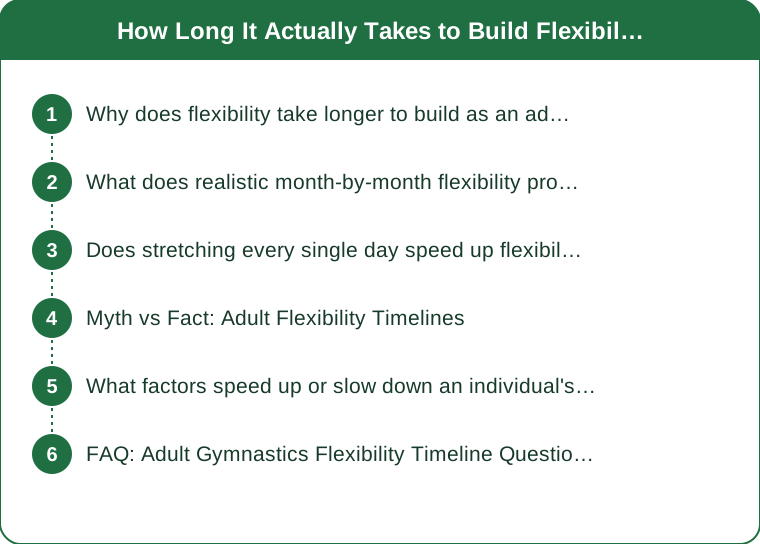
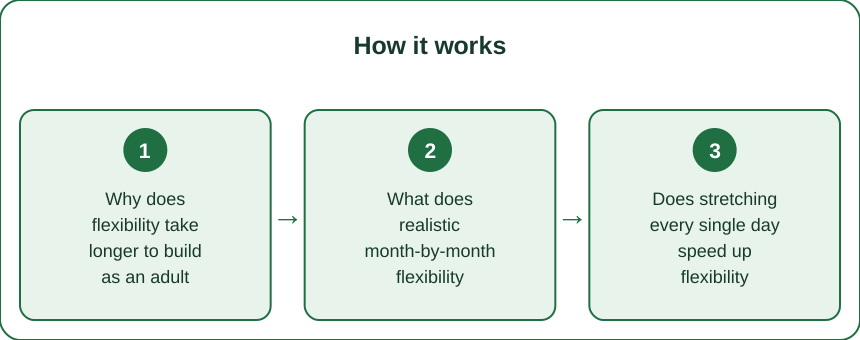
Why does flexibility take longer to build as an adult compared to a child?
Connective tissue (tendons, ligaments, fascia) becomes less pliable with age due to natural changes in collagen structure, meaning the same stretching stimulus produces slower adaptation in an adult body than a child’s still-developing one.
This doesn’t mean adult flexibility gains are impossible — it means the honest timeline is longer, and expecting child-like speed sets up unnecessary discouragement early in training.
What does realistic month-by-month flexibility progress actually look like?
Weeks 1-4 typically bring noticeable improvement in comfort and range during stretches themselves, even if visible position depth hasn’t changed much yet — this is largely nervous system adaptation, not tissue lengthening.
Months 2-3 often show the first visible improvements in split depth or flexibility positions, and months 4-6+ is where more dramatic, sustained changes tend to show up for consistent trainees.
Does stretching every single day speed up flexibility gains, or is rest needed too?
Daily light stretching is generally safe and can be beneficial, but more intense flexibility work (deep static holds, PNF stretching) benefits from at least a day or two of recovery between intense sessions, similar to strength training.
Overaggressive daily deep stretching without any recovery can actually increase injury risk without meaningfully speeding up the adaptation timeline — consistency matters more than intensity every single day.

Myth vs Fact: Adult Flexibility Timelines
Myth: If you weren’t flexible as a kid, you can’t become flexible as an adult. Fact: adults with no gymnastics or dance background regularly achieve full splits and significant flexibility gains through consistent training — starting point affects the timeline, not the ceiling.
Myth: Pain during stretching means it’s working. Fact: a stretching sensation should feel like tension or mild discomfort, not sharp pain — pushing into genuine pain increases injury risk and can actually set back progress by causing tissue damage that needs recovery time.
What factors speed up or slow down an individual’s flexibility timeline?
Consistency is the single biggest factor — 4-5 short sessions weekly reliably outperform one long weekly session, even at the same total weekly stretching time.
Age, previous activity background, genetics, and even hydration and warm-up quality before stretching all play a role, which is why timelines vary meaningfully between individuals doing similar programs — comparing your timeline to a classmate’s isn’t a reliable measure of whether your training is working.
FAQ: Adult Gymnastics Flexibility Timeline Questions, Answered
Is it possible to get full splits as an adult with zero prior flexibility background?
Yes, this is achievable for most adults without underlying joint conditions, though the timeline (often 6 months to a year-plus of consistent training) is longer than many expect starting out.
Should I stretch before or after strength and gymnastics skill training?
Dynamic stretching before training and deeper static stretching after (when muscles are warm) is a commonly recommended approach — deep static stretching on cold muscles before intense training isn’t ideal.
When should flexibility training be paused or modified due to pain?
Sharp, joint-level pain (versus general muscle tension) is a signal to stop and potentially consult a physical therapist rather than push through — this is general information, not medical advice.
TL;DR:
- Most adults see meaningful flexibility progress within 8-12 weeks of consistent stretching
- Full splits or advanced goals often take 6 months to over a year, and that’s normal
- Consistency (4-5 short sessions weekly) matters more than occasional long sessions
- Adult flexibility timelines are genuinely slower than childhood ones due to connective tissue changes, not a sign of failure
A slower flexibility timeline as an adult isn’t a personal shortcoming — it’s a well-documented physiological reality, and the progress still comes if the consistency is there.
Keep Reading
This article is for general informational and styling purposes only. Fit, sizing, and product availability may vary.