The Chalk and Grip Basics Every Adult Gymnastics Beginner Skips
Quick Answer: Most adult beginners’ hands slip on bars and rings not from weak grip strength but from applying chalk incorrectly (too much, too little, or on sweaty skin) — a thin, even, properly-timed chalk layer solves the majority of early slipping issues.
You’re doing everything the coach says with your shoulders and core, and you still slide off the bar mid-swing. Before assuming it’s a strength problem, check your chalk technique — it’s the most commonly skipped basic in adult classes, because coaches assume everyone already knows it.
Why does chalk matter so much more than people expect?
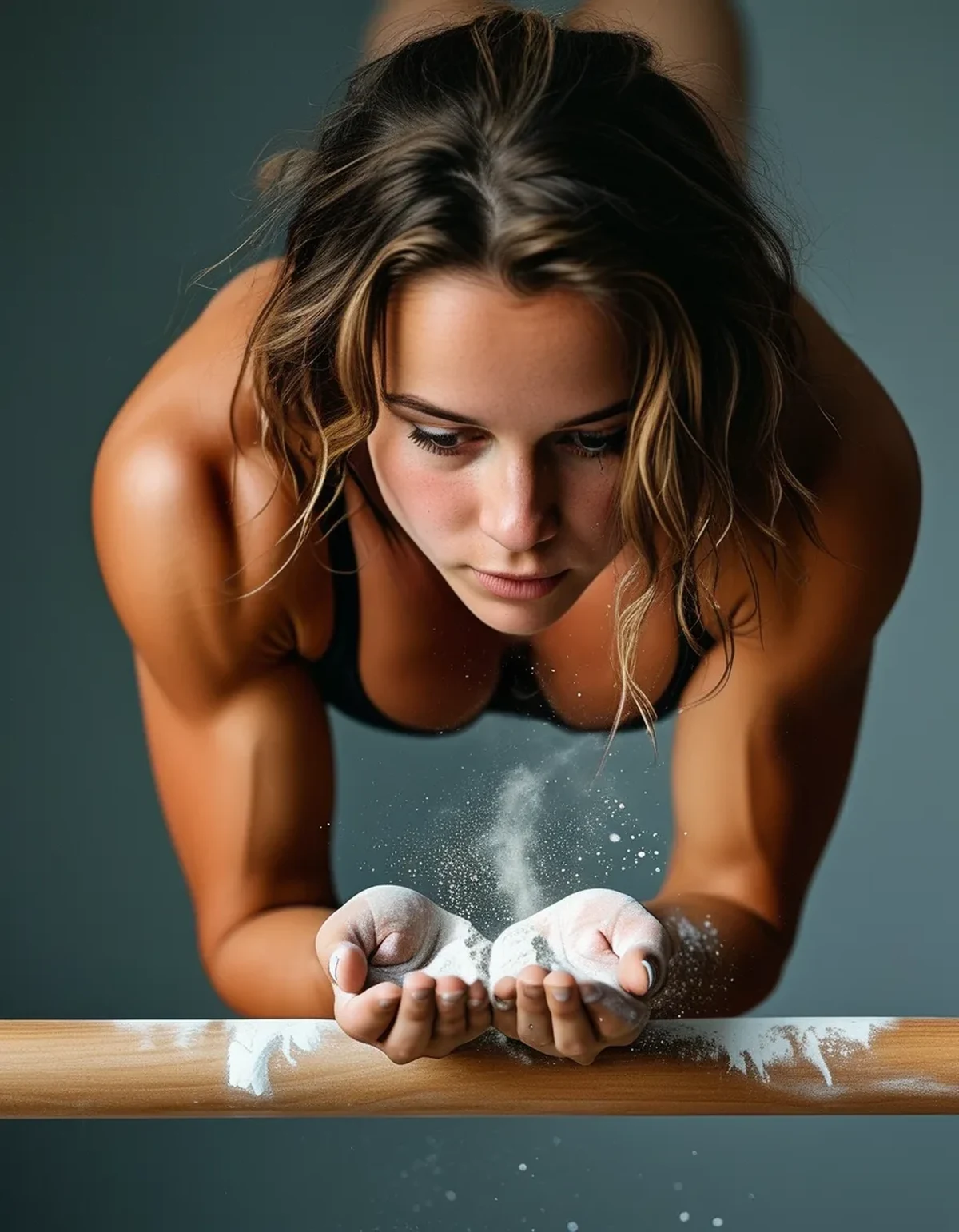
Chalk (magnesium carbonate) works by absorbing palm moisture, not by making your hands ‘stickier’ in a generic sense — sweaty palms are the single biggest cause of slipping for adult beginners, since nerves and unfamiliar grip positions both increase sweat production. Without addressing moisture directly, no amount of grip strength training will fully fix the slip.
Many adult beginners apply chalk once at the start of class and never reapply, not realizing that a 45-minute session of nervous, sweaty hands needs several light reapplications, not one heavy dose.
How much chalk is actually the right amount?
Less than you think, applied more often. A thick, clumpy layer of chalk actually reduces grip by creating a slick, powdery buildup between your skin and the bar — the goal is a thin, even film, reapplied every few sets rather than one heavy coating.
Rub chalk into your palms and between fingers, then clap off the excess before gripping — the visible white residue left on the bar afterward should be a light dusting, not a thick chalky handprint.

What Nobody Tells You About Grip Fatigue
Grip strength fatigues faster than most other muscle groups in early training, meaning your hands may be the limiting factor on a skill long before your shoulders or core actually give out — this is normal and not a sign you’re weaker than you should be. Adult beginners often misread grip fatigue as a strength failure everywhere else.
Dead hangs and simple bar-hang holds, done a few times a week outside class, build grip endurance specifically, which often unlocks more time on skills that felt impossible purely due to slipping, not actual skill difficulty.
5 Mistakes Adult Beginners Make With Grip
1. Chalking once and never reapplying during a long session.
2. Over-chalking, creating a slick powder buildup instead of a thin film.
3. Ignoring rings and bar grips (leather or synthetic) that experienced gymnasts use to protect skin and improve hold, dismissing them as unnecessary for beginners.
4. Skipping grip-specific conditioning like dead hangs, assuming general strength training covers it.
5. Not addressing torn or calloused skin promptly, which changes how chalk and grips interact with the bar.
FAQ: Adult Gymnastics Grip Questions, Answered
Is chalk necessary for every adult gymnastics beginner?
Most gyms provide it and most beginners benefit from it, though a few naturally dry-handed people need less than average.
Do I need grips (leather palm guards) as a beginner?
Not immediately — most coaches recommend building basic chalk technique and grip endurance first before adding grips, which have their own learning curve.
How long does it take for grip endurance to noticeably improve?
Many adult beginners notice a meaningful difference within 3-4 weeks of adding a couple of short dead-hang sessions per week outside regular class.
TL;DR:
- Most early slipping on bars is a moisture and chalk-technique problem, not a strength problem
- A thin, even, frequently-reapplied chalk layer works better than one heavy coating
- Grip fatigues faster than other muscle groups early on — that’s normal, not weakness
- Simple dead hangs a few times a week build the grip endurance that unlocks harder skills.
Keep Reading
This article is for general informational and styling purposes only. Fit, sizing, and product availability may vary.